
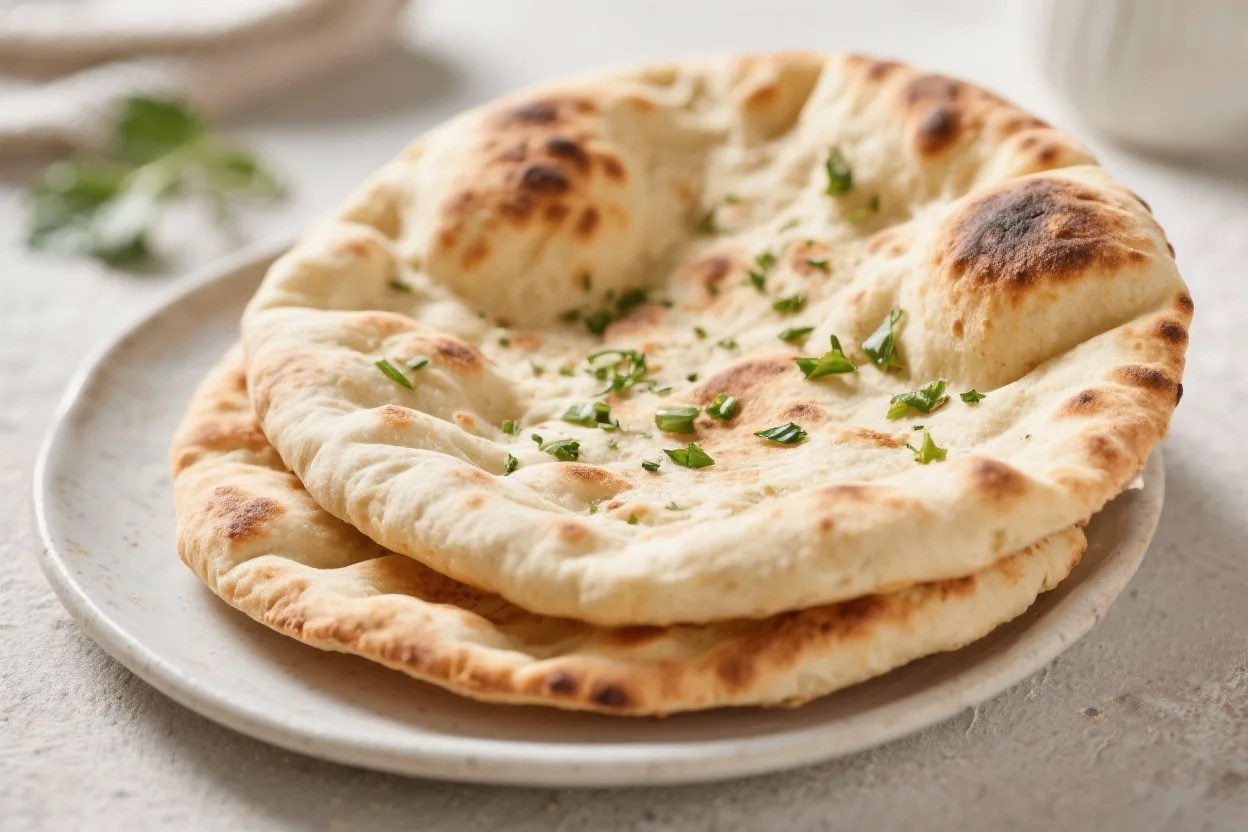
If you’ve been missing warm, pillowy naan since going gluten free, this recipe brings it back to your table. It’s soft, chewy, and lightly blistered—perfect for scooping curries, wrapping sandwiches, or eating straight from the pan. You don’t need a tandoor, fancy tools, or complicated steps.
Just a mixing bowl, a skillet, and a handful of pantry ingredients. The dough comes together quickly, and the results are shockingly close to traditional naan.
Table of Contents
What Makes This Recipe So Good
- Authentic texture: Soft and flexible with little charred spots from the skillet.
- Simple ingredients: A good gluten free flour blend, yogurt, and a touch of oil do most of the work.
- No yeast needed: This version uses baking powder for lift, so it’s fast and reliable.
- Customizable: Add garlic, herbs, or dairy-free swaps without losing the texture.
- Freezer-friendly: Make a batch, freeze, and reheat in minutes.
Ingredients
- 2 cups gluten free all-purpose flour blend (with xanthan gum)
- 2 teaspoons baking powder
- 1 teaspoon fine sea salt
- 1 teaspoon sugar (optional, helps browning)
- 1/2 teaspoon baking soda
- 2/3 cup full-fat plain yogurt (dairy or dairy-free)
- 2/3 cup warm milk or dairy-free milk (plus more as needed)
- 1 tablespoon neutral oil (avocado, light olive, or sunflower)
- 2 teaspoons apple cider vinegar or lemon juice
- 2 tablespoons melted ghee, butter, or olive oil (for brushing)
- Optional flavor add-ins: 2 cloves garlic (minced), 2 tablespoons chopped cilantro, 1 teaspoon nigella seeds
How to Make It
- Mix the dry ingredients. In a large bowl, whisk the gluten free flour, baking powder, salt, sugar, and baking soda until evenly combined.
- Combine the wet ingredients. In a measuring cup, stir together the yogurt, warm milk, oil, and vinegar. The acidity helps tenderize and lift the dough.
- Form the dough. Pour the wet mixture into the dry ingredients.Stir with a spoon or spatula until a soft dough forms. If it looks dry or crumbly, add milk 1 tablespoon at a time. You want a slightly tacky, pliable dough.
- Rest the dough. Cover the bowl and let the dough sit for 15–20 minutes.This allows the flour to hydrate and makes rolling easier.
- Divide and shape. Lightly flour your surface with gluten free flour. Turn out the dough and divide into 6–8 equal pieces. Roll each piece into a ball.
- Roll the naan. Using a floured rolling pin, roll each ball into an oval about 1/4-inch thick.If using garlic, cilantro, or nigella seeds, sprinkle them on top and gently press them into the surface.
- Heat the pan. Preheat a heavy skillet or cast-iron pan over medium to medium-high heat until hot. A hot pan is key for char and puff.
- Cook the first side. Place one rolled naan in the dry pan. Cook until bubbles form and the underside has golden spots, 1–2 minutes.
- Flip and finish. Flip and cook the second side another 1–2 minutes.Adjust heat if it browns too fast. Repeat with remaining dough.
- Brush and serve. Brush warm naan with melted ghee, butter, or olive oil. Sprinkle with a pinch of salt if you like.Serve immediately or keep warm wrapped in a clean towel.
Keeping It Fresh
- Short-term storage: Cool completely, then store in an airtight container at room temperature for up to 24 hours.
- Refrigeration: Keep in the fridge for up to 4 days. Reheat in a hot skillet for 30–60 seconds per side to bring back the softness.
- Freezing: Layer naan with parchment and freeze in a zip-top bag for up to 2 months. Reheat from frozen in a skillet or toaster oven until soft and warm.
- Avoid microwaving: It can turn naan tough or gummy.A skillet is best for texture.
Health Benefits
- Gluten free: Suitable for those with celiac disease or gluten sensitivity when using certified gluten free ingredients.
- Protein and calcium: Using yogurt adds a bit of protein and calcium, especially if you pick a Greek-style yogurt.
- Customizable fats: Choose heart-healthy oils, like olive or avocado oil, to keep it lighter without sacrificing flavor.
- Dairy-free option: Using coconut or almond milk and a dairy-free yogurt keeps it friendly for lactose intolerance.
What Not to Do
- Don’t skip the rest time. Hydration is essential for gluten free dough to relax and roll smoothly.
- Don’t use a cold pan. You won’t get the signature bubbles or char without high heat.
- Don’t over-flour while rolling. Too much flour leads to dry, stiff naan. Light dusting only.
- Don’t roll too thin. Naan should be about 1/4-inch thick. Thinner dough dries out and tears.
- Don’t rely on the microwave. It can make naan rubbery.Reheat in a skillet for best results.
Recipe Variations
- Garlic Naan: Mix 2–3 minced garlic cloves into the dough or press onto the surface before cooking. Brush with garlic butter.
- Cilantro-Lime: Add chopped cilantro to the dough and finish with a squeeze of lime and sea salt.
- Nigella Seed (Kalonji): Press nigella seeds onto the rolled dough for a classic aroma and mild oniony flavor.
- Dairy-Free: Use dairy-free yogurt and milk, and brush with olive oil instead of butter or ghee.
- Yeasted Version: Replace baking powder and soda with 1 teaspoon instant yeast, add 1 teaspoon sugar, and rest the dough 45–60 minutes until puffy before rolling.
- Whole-Grain Boost: Swap up to 1/3 cup of the flour blend with certified gluten free oat flour for extra flavor and fiber. Add a splash more milk if needed.
FAQ
Which gluten free flour blend works best?
A high-quality all-purpose gluten free blend that includes xanthan gum works best.
If your blend doesn’t include xanthan, add 1/2 teaspoon to the dry ingredients for better stretch and structure.
Can I make the dough ahead of time?
Yes. Mix and rest the dough, then cover and refrigerate for up to 24 hours. Let it sit at room temperature for 15–20 minutes before rolling so it’s easier to handle.
How do I get more char and bubbles?
Use a heavy, preheated skillet and keep the heat on the higher side of medium-high.
Don’t oil the pan. Brush with butter or oil after cooking, not before.
Why is my naan cracking when I roll it?
The dough is likely too dry. Knead in a teaspoon or two of warm milk until it feels soft and slightly tacky.
Also, make sure you let it rest so the flours hydrate.
Can I bake the naan instead of using a skillet?
You can, but a skillet gives the best texture. If baking, use a preheated pizza stone at 475°F (245°C) for 3–5 minutes until puffed with light browning, then finish under the broiler briefly.
Is this recipe vegan?
It can be. Use dairy-free yogurt and milk, and brush with olive oil.
The texture remains soft and flexible when you keep the dough slightly moist.
Final Thoughts
Gluten free naan doesn’t have to be a compromise. With the right flour blend, a brief rest, and a hot skillet, you’ll get soft, chewy flatbreads that rival your favorite restaurant version. Keep a batch in the freezer for easy weeknight curries, wraps, and snacks.
Once you try this method, it’ll become a regular in your rotation.