
Elevate your next gathering with an impressive charcuterie board meat flowers display. This easy and quick technique transforms simple deli meats into beautiful, edible roses. It’s a guaranteed way to add elegance and a touch of gourmet flair to any occasion, from casual get-togethers to festive celebrations. You’ll surprise and delight your guests with these stunning meat creations.
Table of Contents
Why You’ll Love These Charcuterie Meat Flowers
Transform a simple spread into a show-stopping centerpiece with minimal effort. These meat roses are incredibly easy to make, even for beginners, requiring just a few basic ingredients and tools.
- They instantly elevate your charcuterie board’s visual appeal.
- The technique is surprisingly simple, yet yields impressive results.
- You can customize them with various meats and sizes for any theme.
- They create a festive and elegant presentation for any event.
- Meat flowers serve as a fantastic conversation starter for guests.
Ingredients
Crafting gorgeous charcuterie board meat flowers starts with the right meats. Thinly sliced, round deli meats work best for creating defined petals.
- 3 oz thinly sliced salami (+/- 20 slices, for a large rose)
- 3 oz large uncured pepperoni (3″), (+/- 12 slices, for a large rose)
- 1 oz thinly sliced salami (+/- 6 slices, for a small rosebud)
- or
- 1 oz regular pepperoni (1.75″), (+/- 8 slices, for a small rosebud)
- Other round deli meats (e.g., ham, turkey – ensure they are pliable)
Notes & Substitutions
Salami and larger pepperoni are ideal for forming the structure and petals of your meat flowers due to their round shape and pliability. Ensure your slices are uniformly thin, as this is crucial for the petals to hold their shape and fold easily. The quantity of meat needed will depend entirely on how many roses you want to create and their desired size and fullness. For other deli meat options, choose sturdier cuts that can be easily cut into rounds.
Equipment
You only need a few simple items from your kitchen to create beautiful charcuterie board meat flowers.
- Drinking glasses (various rim sizes, from shot glasses to standard tumblers)
- Charcuterie board or a flat serving surface
Instructions
Creating beautiful charcuterie board meat flowers is a fun and simple process. Follow these steps for perfect results every time.
Prepare your workspace: Gather your selected thinly sliced deli meats and a clean drinking glass. Choose a glass size that corresponds to your desired flower size.
First Layer: Fold a single slice of salami or pepperoni in half over the rim of your chosen glass. Press firmly to create a distinct crease. Ensure roughly half of the slice hangs inside the glass and the other half outside. Add the next slice, overlapping the first by about ¼ to ½ inch, and press to crease again. Repeat this with one to two more slices to fully cover the rim of the glass and complete your initial layer.
Second Layer: Begin building your second layer by placing a new meat slice anywhere two previous slices overlap. Press it firmly to crease over the rim. Then, add another two to four overlapping slices to finish this layer, working your way around the glass.
Layers 3-5+: Continue adding layers of salami or pepperoni slices until your meat rose reaches your desired fullness. As you fold, keep an eye on the opening in the center of the glass. A smaller hole indicates a fuller, more intricate meat flower. You can stop at three layers for a simpler design, or continue for four to five layers or more until the center hole closes for a dense, intricate bloom.
Release the flower: Once satisfied with your creation, carefully place the palm of your hand over the top of the glass. Gently but firmly flip the glass upside down onto your charcuterie board or a flat serving surface. Press the glass down lightly to help the formed flower settle into its shape.
Carefully lift glass: Slowly and gently lift the glass straight up to reveal your stunning, sculpted salami or pepperoni rose. Marvel at your perfectly formed charcuterie board meat flowers.
Repeat as desired: Continue these steps to create as many meat roses as you need. Experiment with different glass sizes to produce a variety of flower sizes, from small buds to large, fully bloomed roses.
To Store or Make Ahead: If you’re preparing your meat roses in advance for a charcuterie board, leave the glass in place after flipping the flower over. Wrap the glass and flower tightly in plastic wrap and refrigerate.
Pro Tips & Troubleshooting
Achieving perfect charcuterie board meat flowers is simple with a few helpful pointers. Always choose fresh, pliable meats; they fold and hold their shape much better than drier slices. Don’t overfill the glass too quickly, especially in the initial layers, as this can make the flower difficult to release cleanly. Practice your petal arrangement; the more you make these salami flowers, the more naturally they’ll come together. Ensure you create firm creases for each slice to give the meat rose stability. If a flower ever gets stuck, use a thin cutting board or a spatula to gently slide it off the glass. Slightly chilling the meat before shaping can also improve its pliability and firmness. For varied rosebud effects, experiment with different glass sizes, from small shot glasses to wider tumblers.
The USDA provides comprehensive information on safe food handling practices for deli meats.
Serving, Storage & Variations
These gorgeous charcuterie board meat flowers are versatile additions to any spread.
Serving:
Strategically place your meat flowers as captivating focal points on your charcuterie board. Arrange them alongside your favorite cheeses, fresh and dried fruits, artisanal crackers, and olives. Their visual appeal instantly elevates the entire presentation.
Storage:
If you’re preparing them in advance, leave the meat flower in the glass after flipping it onto your board. Wrap the entire assembly tightly in plastic wrap to prevent drying. You can refrigerate these prepared charcuterie board meat flowers for up to two to three days before serving.
Make ahead:
For the freshest appearance, it’s best to assemble your meat roses a few hours before your event. This ensures they maintain their crisp texture and vibrant look.
Variations
- Meat types: Don’t limit yourself to just salami and pepperoni. Experiment with different deli meats like thinly sliced cooked ham, turkey, or even mortadella for diverse flavors and colors.
- Size: Use miniature shot glasses for delicate, small rosebuds, or opt for larger wine glasses and tumblers to create grand, full blooms that really stand out.
- Color combinations: Mix and match light and dark meats to create striking color contrasts within your floral displays. For example, use lighter turkey slices for outer petals and darker salami for the center.
- Arrangement styles: Create clustered bouquets of meat flowers in one section of the board, or scatter individual roses strategically across the entire surface for a more organic, garden-like aesthetic.
Nutrition
When incorporating charcuterie board meat flowers into your spread, it’s helpful to consider the nutritional aspects of common deli meats. Most cured meats, like salami and pepperoni, are generally higher in sodium and fat content. They provide protein but should be consumed in moderation as part of a balanced diet.
For those looking to reduce calorie intake, consider using leaner deli options such as thinly sliced turkey or chicken breast. These choices still create beautiful meat flowers but offer a lighter alternative. Always emphasize moderation to enjoy your charcuterie creations responsibly. According to the USDA, understanding the nutrient content of luncheon meats with an emphasis on sodium can help in making informed dietary choices.
| Nutrient | Salami (per oz) | Pepperoni (per oz) | Lean Turkey (per oz) |
|---|---|---|---|
| Calories | 100-120 | 130-150 | 30-40 |
| Protein (g) | 4-6 | 5-7 | 6-8 |
| Fat (g) | 8-10 | 12-14 | 0.5-1 |
| Sodium (mg) | 450-550 | 450-550 | 200-300 |
Nutritional values are approximate and can vary by brand and specific product.
FAQ
What kind of meat works best for charcuterie board meat flowers?
Thinly sliced, round deli meats like salami, pepperoni, or even thinly sliced cooked ham work best because they are pliable and hold their shape well when folded.
How many slices do I need for one meat flower?
The number of slices varies by size and fullness, but typically 12-20 slices for a large rose and 6-8 for a small rosebud are sufficient.
Can I make these meat flowers in advance?
Yes, you can prepare your charcuterie board meat flowers a few hours ahead of time. For best results, leave the flower in the glass, wrap it tightly, and refrigerate.
What if my meat roses don’t hold their shape?
Ensure your meat is thinly sliced and pliable. Firmly crease each fold over the glass rim and don’t be afraid to add more layers for structural support.
Can I use different types of glasses to make different sized flowers?
Absolutely! Use shot glasses for tiny rosebuds, wine glasses for medium flowers, and wider tumblers for large, show-stopping blooms.
Conclusion
Creating charcuterie board meat flowers is an incredibly simple yet highly effective way to elevate any snack board into a work of art. This easy technique transforms ordinary deli meats into visually stunning edible roses, perfect for impressing guests without extensive culinary effort. We encourage all home cooks, especially beginners, to try this delightful trick and transform their next charcuterie experience. Share your beautiful charcuterie board meat flowers creations and inspire others!
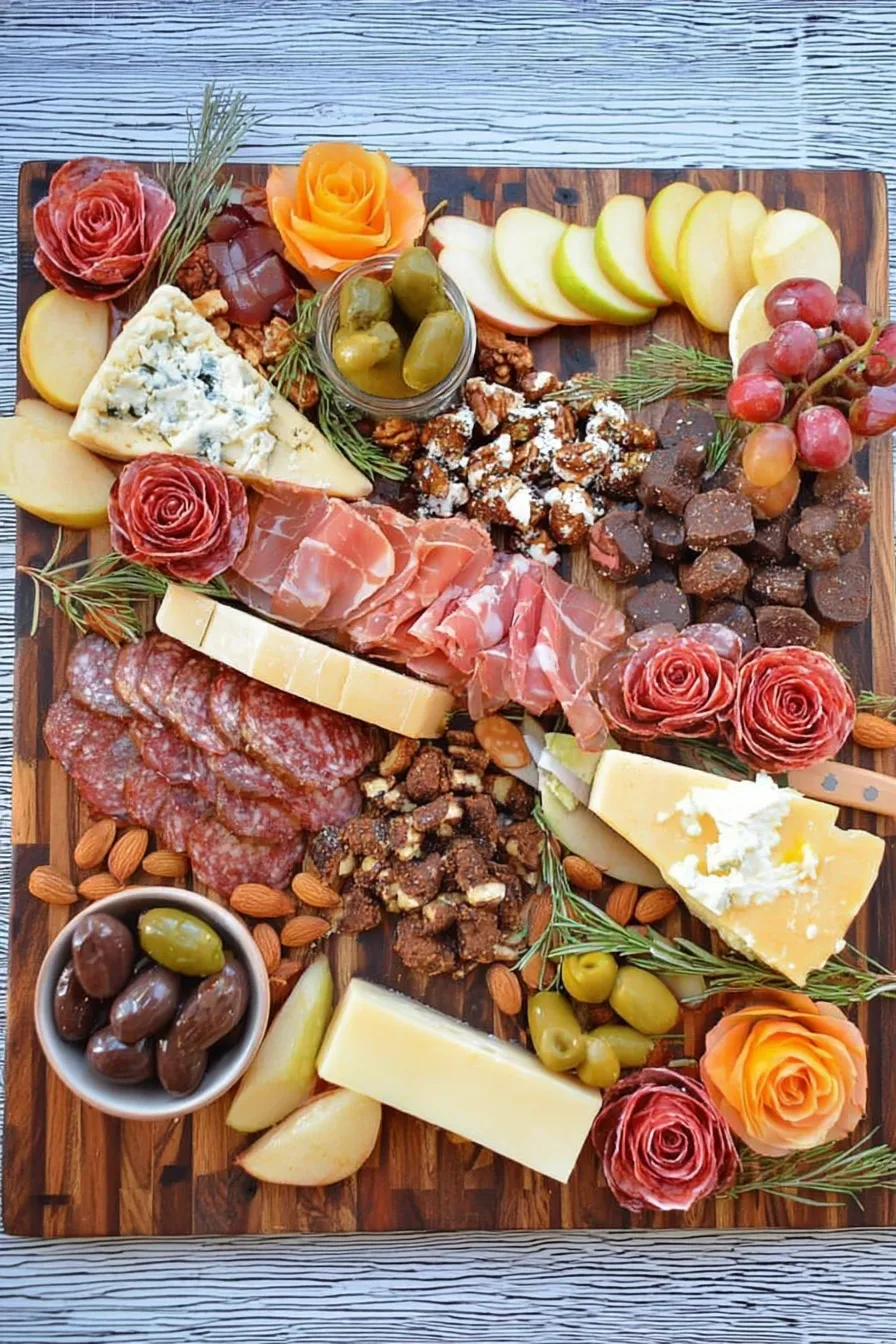
How to Create Stunning Charcuterie Board Meat Flowers
Ingredients
Equipment
Method
- Fold a slice of salami or pepperoni in half over the rim of your glass, creasing it firmly. Continue to add 1-2 more slices, overlapping each by ¼-½ inch, until the rim is covered to complete the first layer.
- For the second layer, place a meat slice where any two previous slices overlap, pressing firmly to crease. Add 2-4 more overlapping slices to complete this layer.
- Continue layering salami or pepperoni slices, monitoring the hole in the middle of the glass; a smaller hole results in a fuller flower. You can stop at 3 layers for simplicity or continue up to 4-5+ layers for a more intricate design.
- Once done, palm the top of your glass and carefully flip it over onto a charcuterie board or flat surface. Gently press the glass down to help set the flower, then lift it to reveal your gorgeous salami or pepperoni rose.
- If making meat roses ahead of time, leave the glass in place after flipping, then wrap it in plastic and refrigerate until ready to serve.